How storage and memory features should influence AI packaging
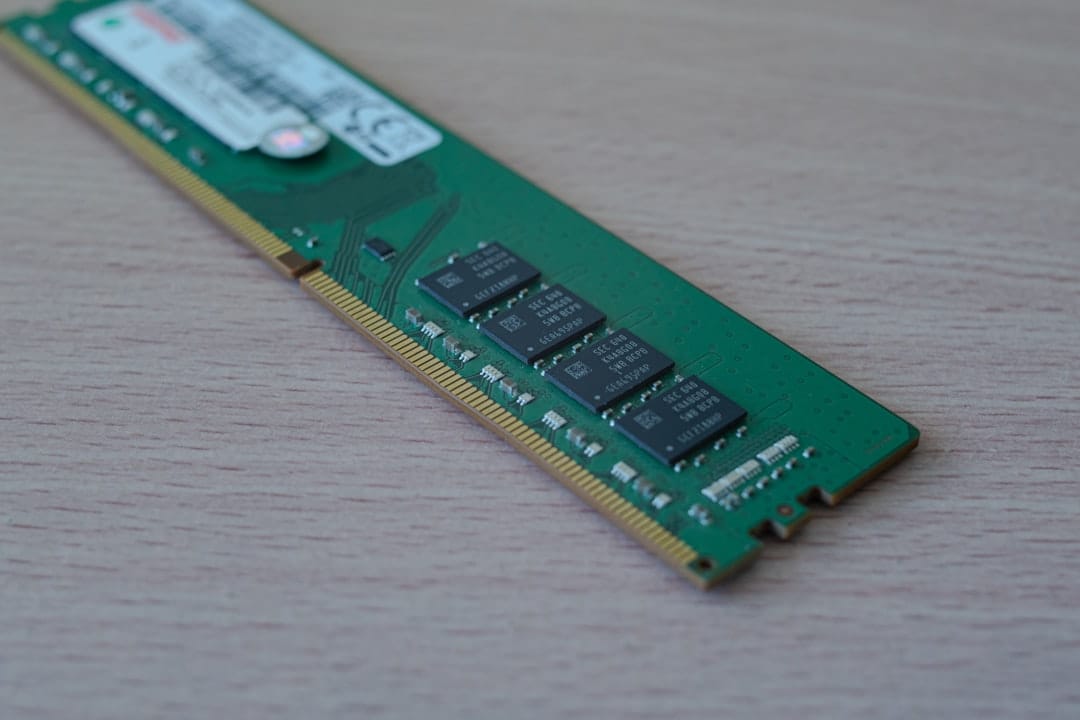
The architecture of AI memory and storage capabilities represents one of the most consequential yet underappreciated dimensions of agentic AI pricing strategy. As enterprises increasingly deploy AI agents that learn, remember, and adapt over time, the way providers package and price these foundational features will fundamentally shape market dynamics, customer value perception, and competitive differentiation. Unlike traditional software where storage was an afterthought, agentic AI platforms must treat memory and storage as first-class strategic assets that directly influence agent intelligence, personalization depth, and business outcomes.
The challenge facing pricing strategists is multifaceted: memory and storage costs represent 30-40% of total AI system expenses in modern data centers, yet customer willingness to pay specifically for these features remains poorly understood. According to research from 2025, the average organization now spends $85,521 monthly on AI-native applications—a 36% increase from the previous year—with storage infrastructure and memory systems consuming increasingly significant portions of these budgets. Meanwhile, 50% of US smartphone owners report unwillingness to pay extra for AI features generally, creating a perception gap that sophisticated packaging strategies must bridge.
This deep dive examines how storage and memory features should fundamentally influence AI packaging decisions across multiple dimensions: the technical cost structures driving pricing floors, the value perception dynamics determining pricing ceilings, the packaging architectures that optimize customer acquisition and expansion, and the emerging trends reshaping monetization models through 2026 and beyond. By integrating comprehensive market research, real-world implementation case studies, and strategic frameworks from leading practitioners, this analysis provides decision-makers with actionable guidance for navigating this critical pricing frontier.
The Economics of AI Memory and Storage: Understanding Your Cost Foundation
Before designing packaging strategies, pricing leaders must comprehend the underlying economics that make memory and storage fundamentally different cost drivers than traditional software features. The AI memory infrastructure landscape has undergone dramatic transformation since 2023, with cost structures that challenge conventional SaaS pricing assumptions.
High-Bandwidth Memory: The New Infrastructure Bottleneck
High-bandwidth memory (HBM) modules that connect to AI accelerators now represent 30-40% of total system costs in datacenter configurations, according to industry analysis from early 2026. This represents a fundamental shift in infrastructure economics—memory expenses now approach parity with GPU costs themselves, driven by inference workloads requiring massive data throughput to feed increasingly large models.
The memory shortage crisis of 2025-2026 has intensified these dynamics. AI data centers are consuming up to 70% of high-end DRAM production by 2026, causing contract prices to surge 50-95% quarter-over-quarter. Samsung's revenue per bit from traditional DRAM is forecast to rise 116% year-on-year to $0.79 in 2026, up from $0.36 the previous year. SK Hynix faces similar increases of 78% to $0.70 per bit, while Micron's pricing climbs 54% to $1.06 per bit.
These hyperinflation-level price spikes stem from hyperscalers like Alphabet and OpenAI securing priority allocation through bulk prepayments, effectively reallocating production capacity from consumer and enterprise markets to AI infrastructure. For AI platform providers, this creates a volatile cost base where memory procurement strategies directly impact pricing viability. Companies that fail to secure long-term supply agreements face hourly price fluctuations and limited quote windows of just 1-30 days.
Vector Database and Context Window Economics
Beyond raw memory hardware, AI agents require specialized storage infrastructure for embeddings, conversation history, and contextual data. Vector database pricing follows three primary models: storage-based at $0.10-$0.25 per GB monthly, query-based at $0.05-$0.20 per 1,000 queries, and compute-based at $0.50-$2.00 per hour for intensive operations like embedding generation.
For mid-sized deployments, total vector database costs typically range from $20-$500+ monthly, scaling with data volume and query frequency. Enterprise subscriptions start at $1,000 monthly for basic tiers with flat fees, support commitments, and service level agreements. Platforms like Pinecone, Weaviate, and Azure Cosmos DB compete in this space, each with distinct pricing architectures that providers must evaluate when determining their own cost structures.
Context window costs tie directly to token-based pricing from foundation model providers. Current rates demonstrate significant variance:
- GPT-4o: $0.01-$0.03 per 1,000 tokens for pay-as-you-go access
- Claude 3 Sonnet: Approximately $3 per million tokens for efficient scaling
- Gemini 2.0 Pro: $3-$5 per million tokens with Google Cloud integration
- DeepSeek V3: $0.50-$1.50 per million tokens for cost-effective open alternatives
These token costs accumulate rapidly for memory-intensive applications. Complex agents consuming 5-10 million tokens monthly can generate bills of $1,000-$5,000 just for language model API access, representing 25-40% of monthly operational expenses. When agents maintain extensive conversation histories or retrieve large knowledge bases, context window expansion directly drives cost escalation.
The Memory Layer Cost Optimization Opportunity
Implementing dedicated AI memory layers offers dramatic cost reduction potential that fundamentally alters packaging economics. According to research from Mem0 published in late 2025, memory systems cut token costs by approximately 90% and reduce latency by 91% compared to sending full conversation history with each request.
This efficiency improvement occurs because memory stores user context across sessions, enabling personalization without continuously expanding context windows. The architectural advantage becomes critical as hardware constraints emerge—server compute has scaled only 1.6× while DRAM bandwidth growth lags behind model expansion requirements.
The most successful implementations use hybrid architectures combining vector search with graph traversal. Vector databases handle semantic retrieval through similarity search, while graph-based systems add structure through explicit connections between memories, improving context depth and relevance. This architectural sophistication creates opportunities for tiered packaging where basic vector search serves entry-level customers while advanced graph-based memory becomes a premium differentiator.
For a typical enterprise deployment, storage infrastructure averages $1,150 monthly (primarily Amazon S3 or equivalent), with additional expenses for specialized services like SageMaker Feature Store adding approximately $1,000 monthly. Total infrastructure costs reach $30,000-$85,000 monthly when including compute, networking, and data preparation—with storage and memory representing 15-25% of this total.
Packaging Architectures: Strategic Approaches to Memory and Storage Tiering
With cost foundations established, the strategic question becomes how to package memory and storage capabilities across pricing tiers to optimize both customer acquisition and revenue expansion. Leading AI platforms demonstrate diverse approaches, each with distinct advantages for different market segments and business models.
The Embedded Inclusion Strategy
The first packaging approach embeds basic memory and storage capabilities across all tiers while gating advanced features as premium add-ons. This strategy prioritizes adoption and platform stickiness over immediate monetization, recognizing that memory features create powerful lock-in effects as agents accumulate customer-specific knowledge.
Zendesk exemplifies this approach in their AI customer service offerings, providing basic agent memory for session continuity across all plans while reserving extended context memory and cross-agent memory sharing for enterprise tiers. The logic is straightforward: once customer service teams experience AI agents that remember previous interactions, downgrading becomes psychologically difficult even if quantitative ROI proves challenging to measure.
This packaging architecture works particularly well for platforms entering competitive markets where AI features serve as table stakes rather than differentiators. By embedding basic memory, providers remove adoption friction while creating clear upgrade paths as customers experience value and demand more sophisticated capabilities.
The embedded approach also aligns with research showing that 45% of SaaS companies are moving toward hybrid models combining base subscriptions with usage-based components. Basic memory inclusion satisfies subscription expectations while usage-based charges for storage volume or memory complexity enable revenue scaling without pricing tier proliferation.
Stratified Capability Tiering
The second major packaging strategy stratifies memory and storage capabilities across distinct tiers aligned with customer sophistication and use case complexity. This approach explicitly positions memory as a value driver rather than infrastructure commodity, with clear capability progressions justifying price differentiation.
Lower tiers offer entry-level automation with capped memory (short-term context only, limited conversation history), mid-tiers add moderate scaling with extended retention periods, and top tiers provide unlimited or high-volume resources tied to service level agreements and outcome guarantees.
According to research from L.E.K. Consulting on AI product packaging strategies, this tiered approach works best when memory capabilities correlate strongly with business value metrics. Industries with longer, more complex sales cycles derive greater value from robust memory capabilities and warrant premium pricing tiers. When AI agents influence larger deals, memory's contribution to deal intelligence and relationship continuity justifies higher pricing.
The stratified model also facilitates customer segmentation based on data sensitivity and compliance requirements. Enterprise tiers can bundle enhanced memory with data residency guarantees, encryption standards, and audit capabilities—features that command significant premiums in regulated industries like healthcare and financial services.
Implementation requires careful metric selection to avoid creating perverse incentives. If memory storage is capped by volume (GB), customers may prune valuable historical data to stay within limits, reducing agent intelligence. If capped by time (30-day vs 90-day retention), seasonal businesses face artificial constraints. Leading implementations instead cap by complexity metrics like number of distinct entities tracked or relationship graph depth, aligning limits with actual computational costs while preserving business value.
Consumption-Based Memory Monetization
The third packaging architecture treats memory and storage as consumption resources billed through credit systems or direct usage metering. This approach has gained significant traction among foundation model providers and is increasingly adopted by platform vendors building on these models.
Salesforce pioneered this with Agentforce, pricing at $2 per conversation with memory allocation included in the per-conversation cost. Anthropic and Jasper use credit-based systems where customers purchase credits for memory-intensive operations, with varying credit costs across different memory tiers. This provides flexibility for premium pricing on extended memory retention and memory complexity scaling.
The consumption model addresses a fundamental challenge in AI pricing: cost variability. Unlike traditional SaaS where marginal costs approach zero, AI agents with memory incur real infrastructure costs that scale with usage. Usage-based pricing aligns revenue with costs, reducing margin risk while enabling customers to start small and scale naturally.
Research from OpenView Partners demonstrates that companies using usage-based pricing grow 38% faster than those with traditional subscription models, suggesting significant market preference for consumption alignment. In AI contexts, this advantage intensifies because customers struggle to predict their memory needs in advance—usage-based models remove the risk of over-provisioning or under-provisioning during initial selection.
However, consumption pricing introduces complexity and unpredictability that some customer segments resist. CFOs and procurement teams prefer predictable budgets, creating tension between operational efficiency and financial planning. Leading implementations address this through hybrid models: base subscriptions include memory allowances with overage charges or credit top-ups for excess consumption. Microsoft Copilot for Security exemplifies this with $4 per hour compute billing that includes memory overhead, providing usage flexibility within a structured framework.
The Outcome-Based Memory Premium
An emerging fourth approach packages memory capabilities within outcome-based pricing models where customers pay based on business results rather than resource consumption. This strategy recognizes that memory's primary value lies not in storage capacity but in enabling agents to deliver superior outcomes through personalized, contextual intelligence.
Under this model, packages reflect agent sophistication (autonomy level, trust score) with bundled memory and storage allowances calibrated to support the promised outcomes. A sales AI agent priced at $50 per qualified meeting scheduled might include unlimited memory for prospect interaction history, competitive intelligence, and relationship mapping—because these memory capabilities directly enable the outcome.
The outcome-based approach solves the willingness-to-pay challenge documented in consumer research. While 50% of smartphone owners resist paying extra for generic AI features, research from a16z shows consumers will pay 2-3× premiums for AI applications that deliver concrete value. Personalized mental health AI commands approximately $77 annually (half of in-person rates), fitness AI attracts $35, and tutoring AI generates $26—all driven by better retention and accessibility enabled by memory.
For B2B applications, outcome-based memory packaging aligns particularly well with high-value, complex workflows. A contract analysis AI priced per contract reviewed can justify extensive memory investment for clause libraries, precedent tracking, and client preference learning because these capabilities directly improve accuracy and reduce review time. The memory cost becomes invisible to customers while remaining strategically central to value delivery.
Implementation challenges include outcome measurement complexity and delayed revenue recognition. If payment occurs only upon outcome achievement, providers must finance memory infrastructure costs during potentially lengthy sales cycles or implementation periods. Hybrid approaches mitigate this through base platform fees covering infrastructure with outcome-based bonuses for performance, creating more balanced cash flow profiles.
Value Communication: Bridging the Memory Perception Gap
Packaging architecture alone proves insufficient without effective value communication strategies that help customers understand why memory and storage capabilities justify premium pricing or usage charges. The perception gap documented in consumer research—where 50% resist paying for AI features despite their transformative potential—extends to enterprise contexts where technical buyers understand infrastructure costs but business buyers focus on outcomes.
The Personalization Value Narrative
The most powerful value narrative positions memory as the foundation for AI personalization that drives measurable business outcomes. According to investor analysis from Inrupt examining OpenAI's memory features, AI memory creates "network effects stronger than social graphs" by capturing personal data for intimate, utility-maximizing assistants that route all digital interactions through a single capable agent.
This narrative resonates because personalization delivers quantifiable benefits. Research shows that AI apps with memory-enabled personalization charge 2-3× premiums over non-AI equivalents, with customers demonstrating willingness to pay when value becomes tangible. The key is connecting memory infrastructure to business metrics customers already track.
For customer service applications, memory enables agents to recognize returning customers, recall previous issues, and maintain relationship continuity—reducing average handle time by 15-30% according to implementations studied. For sales applications, memory tracking of prospect interactions, preferences, and engagement history increases conversion rates by 20-40% by enabling perfectly timed, contextually relevant outreach.
Effective value communication quantifies these outcomes in customer-specific terms. Rather than selling "extended memory retention," providers should position "relationship intelligence that increases close rates" or "conversation continuity that improves customer satisfaction scores." The memory feature becomes invisible while its business impact takes center stage.
The Competitive Differentiation Positioning
A second value narrative positions sophisticated memory capabilities as competitive differentiators that justify premium positioning. This approach works particularly well in crowded markets where basic AI features have become commoditized but memory sophistication varies dramatically.
According to research on AI agent memory architectures from Sparkco.ai, leading implementations combine vector search, graph-based relationships, and temporal awareness to create memory systems that don't just recall facts but understand context, relationships, and evolution over time. This architectural sophistication enables agents to answer questions like "What changed in this customer's priorities between our last three conversations?" or "Which prospects showed similar buying signals to this one?"
Positioning these advanced capabilities requires educating buyers on memory architecture differences. Many enterprise buyers assume all AI agents have equivalent memory—they've experienced ChatGPT remembering conversation context and extrapolate this to all implementations. In reality, memory sophistication varies from basic session context (cleared after each conversation) to persistent multi-agent memory with relationship graphs and temporal reasoning.
Effective differentiation communication uses concrete capability comparisons rather than technical specifications. Demonstration videos showing how your agent recalls and applies insights from months-old interactions while competitors start fresh each session create visceral understanding of value differences. Case studies quantifying how memory-enabled relationship intelligence accelerated deals or prevented churn translate technical advantages into business outcomes.
The Cost Transparency Strategy
A third value communication approach embraces cost transparency, explicitly connecting memory and storage charges to infrastructure expenses while demonstrating optimization efforts. This strategy works particularly well with technical buyers and cost-conscious enterprises who appreciate operational transparency.
Google Cloud exemplifies this approach in their enterprise AI cost documentation, breaking down storage costs (negligible $0.1 monthly for 5GB training data plus 1GB adapters) alongside compute and serving expenses. By showing that storage represents a small fraction of total costs while enabling dramatic efficiency gains (90% token cost reduction through memory layers), they reframe storage charges as value-enabling rather than profit-seeking.
The transparency strategy becomes especially powerful when combined with optimization tooling. Platforms that provide memory usage dashboards, cost forecasting, and optimization recommendations demonstrate commitment to customer success rather than revenue extraction. When customers can see exactly how memory consumption drives costs and receive guidance on right-sizing retention policies or pruning unused data, they perceive charges as fair operational cost-sharing rather than arbitrary pricing.
This approach also prepares customers for the volatile memory market dynamics documented in 2025-2026 research. By explaining how HBM shortages and AI datacenter competition drive memory costs up 50-95% quarter-over-quarter, providers build understanding for potential pricing adjustments while positioning themselves as transparent partners navigating shared challenges.
Implementation Framework: A Strategic Roadmap for Memory-Influenced Packaging
Translating packaging principles and value narratives into operational pricing requires a systematic implementation framework that balances multiple competing priorities: cost recovery, competitive positioning, customer acquisition, expansion revenue, and operational complexity.
Phase 1: Cost Modeling and Margin Analysis
The foundation of memory-influenced packaging begins with comprehensive cost modeling that captures both direct infrastructure expenses and hidden operational overhead. Leading implementations follow a structured approach:
Infrastructure Cost Mapping: Document all memory and storage-related expenses including HBM/DRAM for inference, vector database subscriptions, object storage (S3/Azure Blob), backup and replication, and data transfer/egress charges. For each component, identify fixed costs (minimum capacity requirements) versus variable costs (scaling with usage).
Usage Pattern Analysis: Instrument existing deployments to understand memory consumption patterns across customer segments. Track metrics including average conversation history size, entity count per customer, memory retrieval frequency, storage growth rates, and retention period distributions. This data reveals which customer segments drive costs and which features consume resources.
Margin Scenario Modeling: Build financial models testing different packaging approaches against actual cost data. For each scenario,